
Your leadership team agrees on the goals for the quarter. Then everyone returns to a calendar already full of work that has nothing to do with them.
The old reports still need preparing. Last quarter’s unfinished projects still have meetings. A new request arrives, and somebody agrees to fit it in. At the next leadership meeting, the priorities have barely moved, even though nobody has been idle.
Before asking people to work faster, look at what your team has agreed to stop. If the answer is nothing, your new goals may simply be another layer of work.
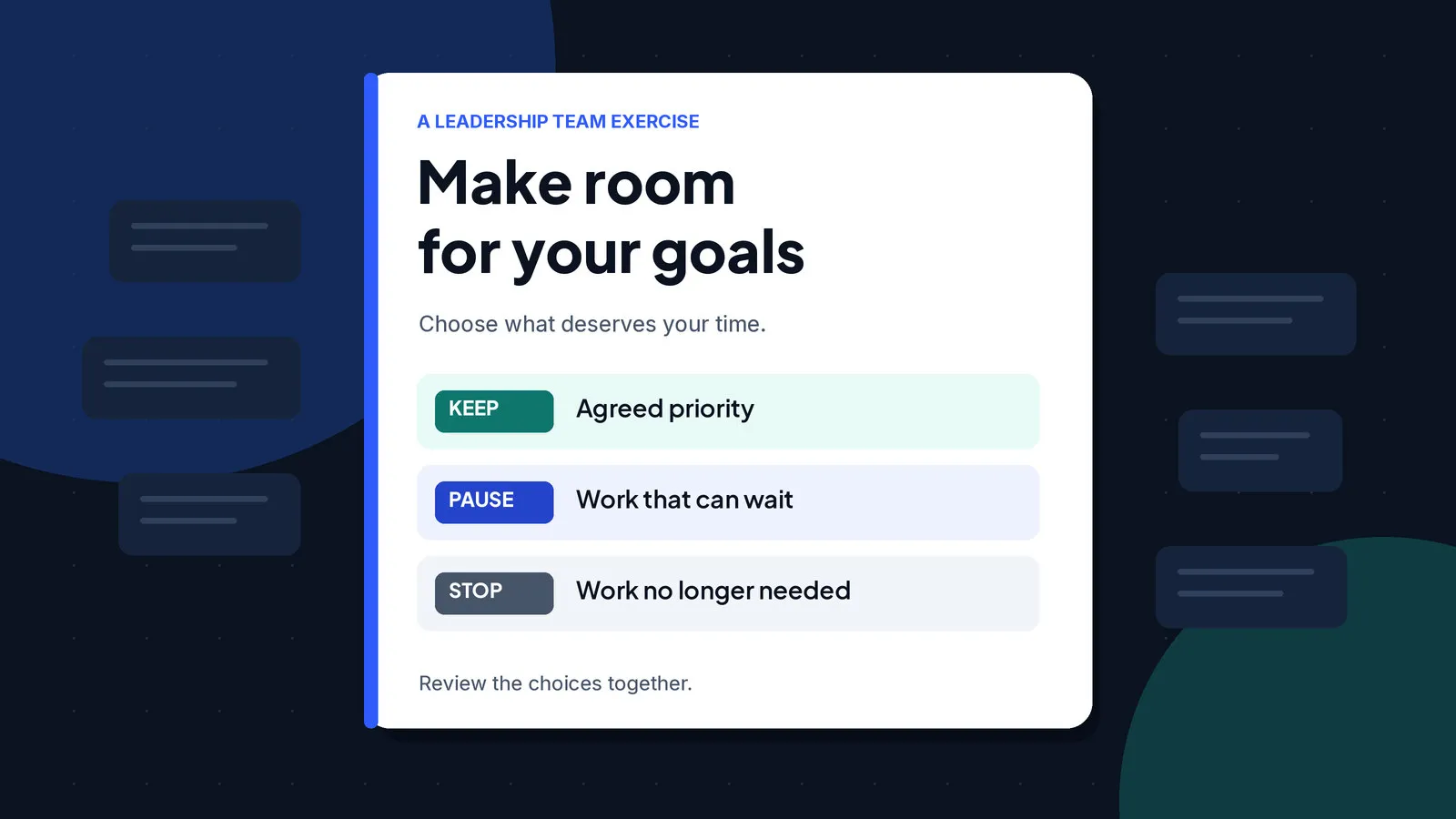
A stop-doing list makes those choices explicit. Use it to decide which commitments still deserve time, which can wait and which should end. Keep the discussion tied to the direction in your Vision Plan, rather than letting each department defend its own workload.
Put the actual workload beside your goals
Bring your Quarterly Priorities to the next Weekly Leadership Meeting. Ask each leader to name the work most likely to prevent them from delivering: active projects, recurring reports, standing meetings and requests they have already accepted.
Include work that never made it onto the official priority list. A department may be carrying a substantial project because somebody mentioned it in a meeting months ago. Find out whether the company still expects it to happen.
You don’t need a detailed time study. Start with the largest competing commitments and ask who needs the result. For a recurring report, identify who uses it and what decision it supports. For a project, check whether its original purpose still holds.
Keep essential operations visible. Customer commitments and necessary controls don’t become optional because they are missing from the quarterly plan. The exercise is about choosing responsibly, not cancelling anything that looks inconvenient.
Separate work you can stop from work you should pause
Imagine a Canadian service company trying to reduce the wait between a signed agreement and the customer’s first appointment. This is a hypothetical example. Its operations leader also owns an internal reporting redesign and prepares a weekly presentation that repeats information already available to the team.
The leadership team might decide to end the duplicate presentation. It might pause the reporting redesign until the appointment process is working. Those are different decisions.
Stopping means the team no longer expects the work. Pausing means it still matters, but you have agreed it won’t receive attention for a defined period or until a stated condition is met.
Be specific about a pause. Record when you will review it and what would justify restarting. Without that agreement, the project can remain an unofficial obligation, with someone still asking for progress each week.
If you cannot remove the work entirely, consider reducing its scope or frequency. A shorter report may meet the same need. Check with its users before deciding that it will.
Make the trade-off a leadership decision
Don’t ask a priority owner to quietly disappoint another department. If a company goal needs time from several teams, the leaders involved should agree what moves.
In the example, sales might still need a reliable view of appointment availability. Ending a presentation should not leave them without information they use to make customer commitments. Agree how they will get that information before removing the old routine.
Ask the affected leaders to explain the consequence of each proposed change. Consider the work required to stop safely, too. Closing a project may involve notifying people or preserving records someone will need later.
The founder and CEO have to accept the same limits. If you revive a paused project in a private conversation, bring that change back to the team. Explain what has changed and which existing commitment will receive less time. Otherwise, your agreed priorities and your actual requests will conflict.
Write decisions that change the coming week
A vague instruction to “focus more” leaves everyone to interpret it differently. Record the specific work the team is removing and the agreement behind it.
For each decision, note:
- The project, report or routine affected.
- Whether you are stopping, pausing or reducing it.
- Who will carry out the change and by when.
- Who needs to know, including anyone who relies on the output.
- The review date or restart condition, if there is one.
Turn the necessary follow-up into Action Items with owners and dates. Update the relevant plans so the old work does not continue to appear as an overdue promise.
Tell the people doing the work what has changed. They should not have to choose between a leadership decision they heard second-hand and an instruction their manager gave them yesterday.
Check whether the decision created room
At the following leadership meeting, ask whether the work actually stopped. A cancelled report can survive as an email request for the same information. A paused project can keep its recurring meeting even after everyone agrees to wait.
Then check the priority you intended to protect. Has its owner been able to take the next agreed step? If not, find out what still competes for their time. Removing one task may help without resolving the whole problem.
Keep this discussion fair. A stop-doing decision is a commitment by the leadership team to change expectations. It should not become a reason to blame someone for an overloaded plan the team approved together.
Start with one competing commitment this week. Make a decision the affected people understand, carry it out and check the result before adding another initiative.
If your team needs help keeping its agreed priorities and follow-up in one place, see how LeaderSync works. Bring one proposed stop-doing decision to your next meeting, alongside the goal it would make room for.